Did you know a coral reef the size of a football field can be home to more than a thousand different animals? And rainforests hold about half of all living things on Earth—even though they cover just 6% of the land. These 18 free ecosystem coloring pages take kids from age 2 all the way to 12 on a trip around the planet. Little ones can start with simple scenes like a cactus in the desert or an acacia tree at sunset. Older kids can tackle the Rainforest Layers Coloring Page that shows all four zones from forest floor to treetops, or learn how energy shrinks at each step with the Energy Pyramid Coloring Page. Every page shows how plants, animals, sun, and water work together in real habitats—and every page is free to print.
Free Printable Ecosystem Coloring Pages
Start your world tour with warm places. Toddlers will love the big shapes of a rainforest tree with hanging vines, or a coral reef full of wavy anemones. The savanna pages show African sunsets and friendly animals like giraffes and elephants standing under acacia trees.
Ready for cooler climates? There are arctic scenes with polar bears on ice, tundra pages with fluffy arctic foxes, and mountain ecosystems where eagles soar above rocky peaks. You can also explore wetlands full of herons and dragonflies, or dive into a pond with frogs on lily pads.
For kids who want to learn the science, the collection includes food chain diagrams that follow energy from sun to plants to animals. The Rainforest Layers Coloring Page stacks all four real layers in one tall picture. And the Energy Pyramid Coloring Page shows why there are always more plants than plant-eaters—only about 10% of energy makes it to the next level. Print a few or grab them all.
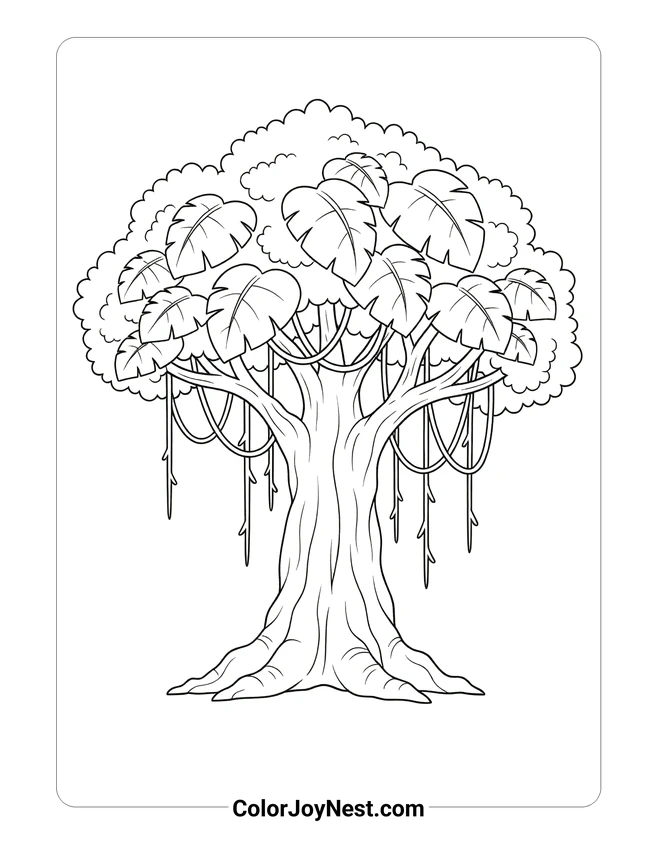
Rainforest Tree Coloring Page
A giant rainforest tree with big leaves and vines.

Coral Reef Coloring Page
Branching corals and sea anemones under the ocean.

Savanna Sunset Coloring Page
Tall acacia tree and big sun on the African savanna.
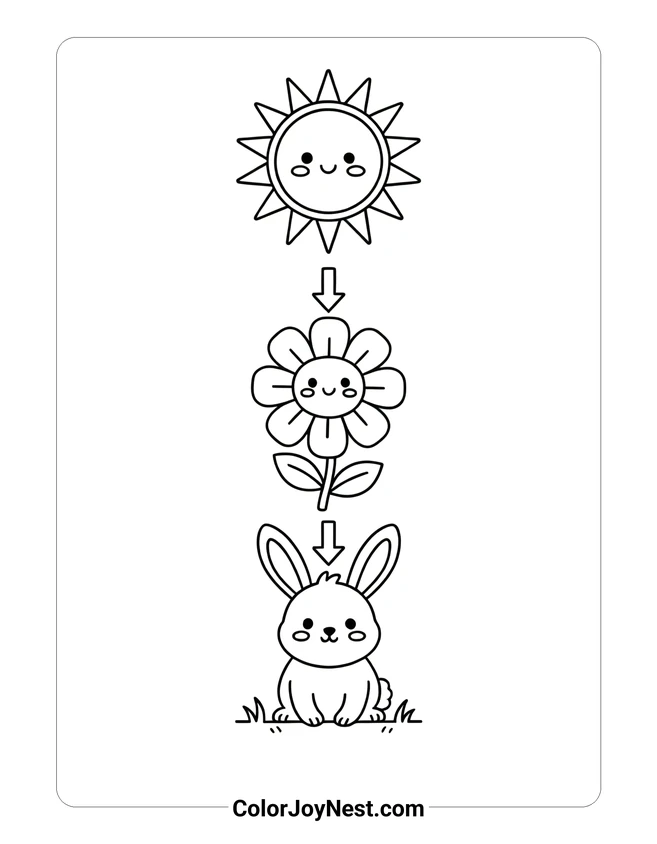
Sun Plant Animal Chain Coloring Page
Basic food chain showing sun, plant, and rabbit.

Desert Cactus Scene Coloring Page
Large cactus and a smiling desert lizard resting on sand.
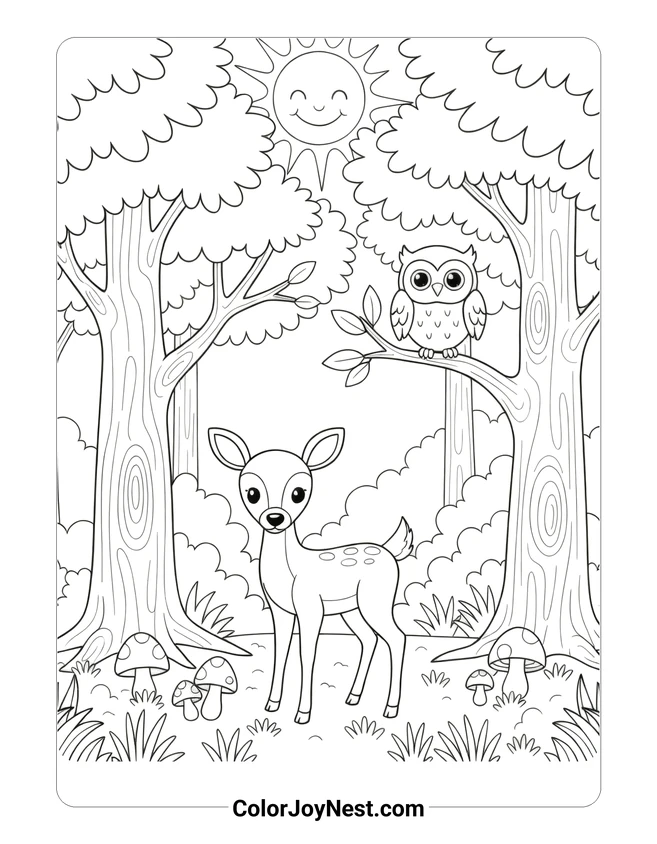
Forest Ecosystem Coloring Page
Forest scene with trees, deer, owl, and mushrooms.
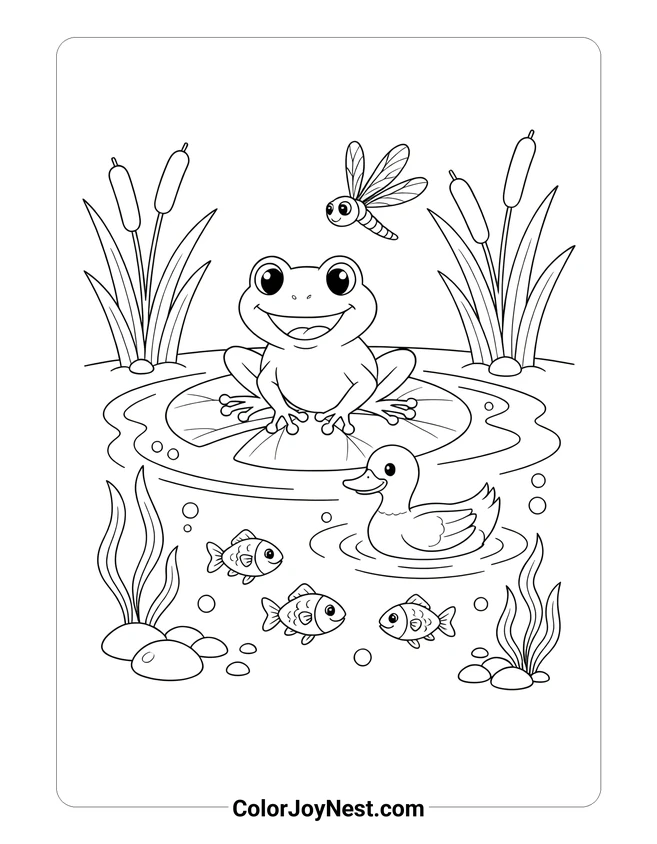
Pond Ecosystem Coloring Page
Pond scene with frog, dragonfly, lily pads, and cattails.
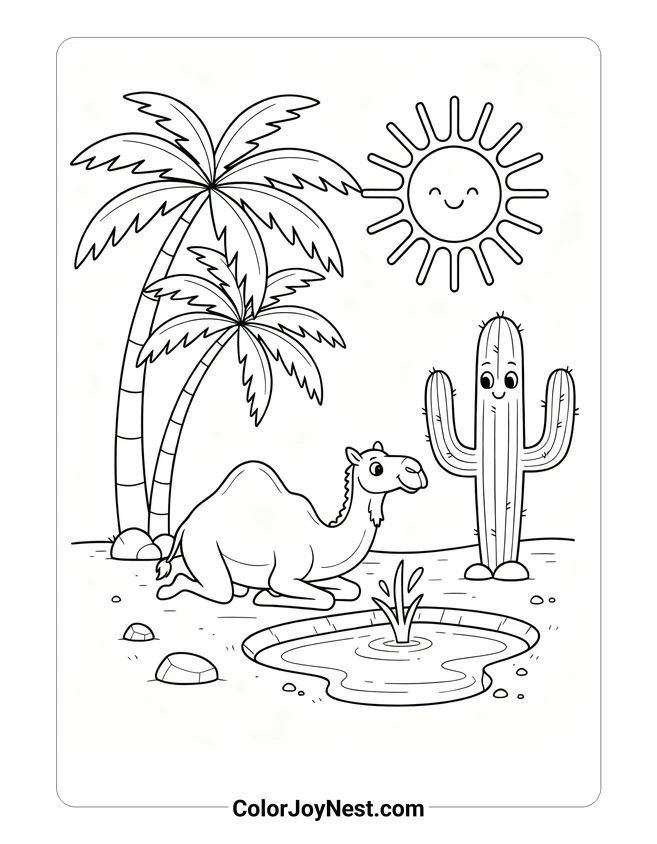
Desert Oasis Coloring Page
Palm trees, cactus and camel around a small pond.
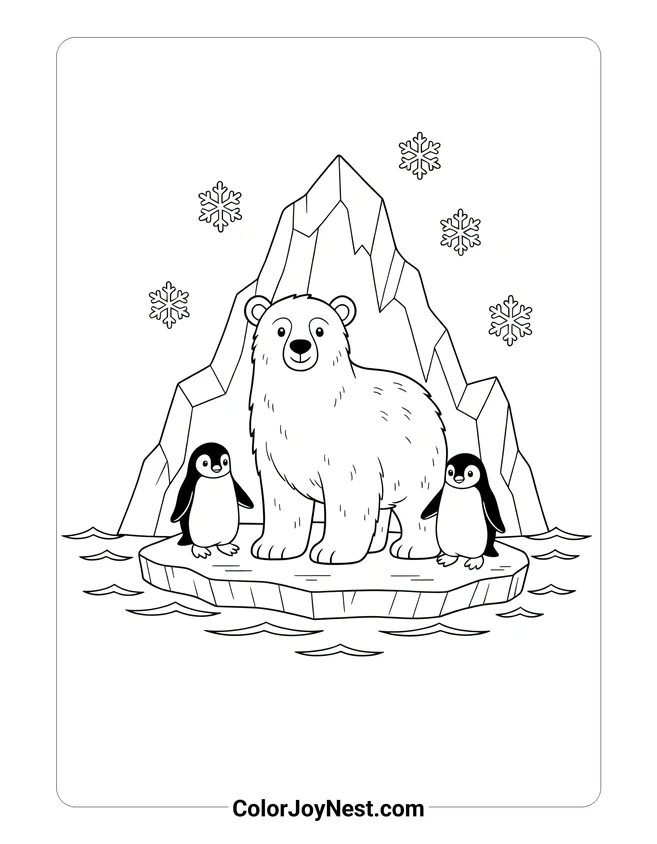
Arctic Ecosystem Coloring Page
A polar bear and penguins on icy land with snow.
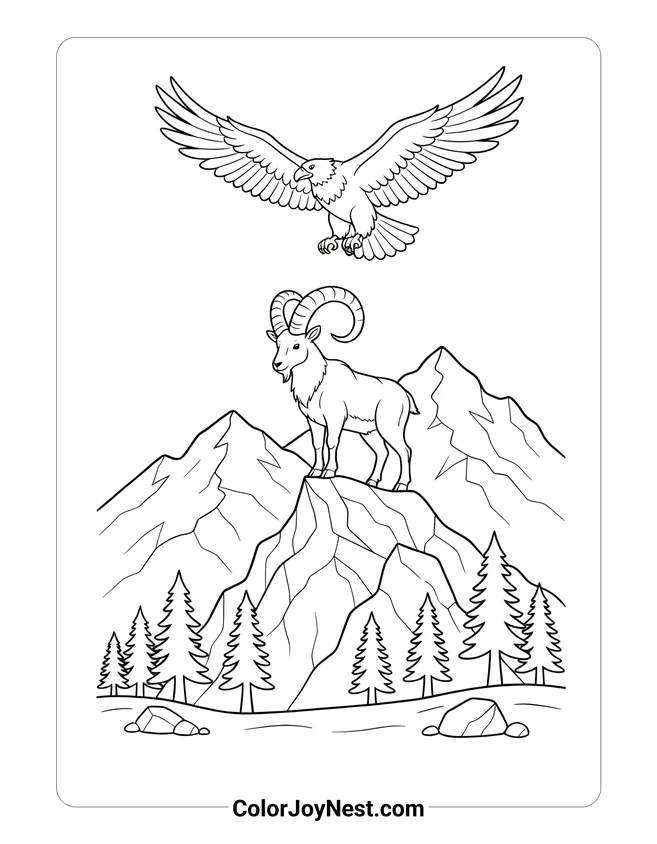
Mountain Ecosystem Coloring Page
Mountain animals like eagle and goat in rocky terrain.

Tundra Ecosystem Coloring Page
Arctic fox and low shrubs in the snowy tundra.
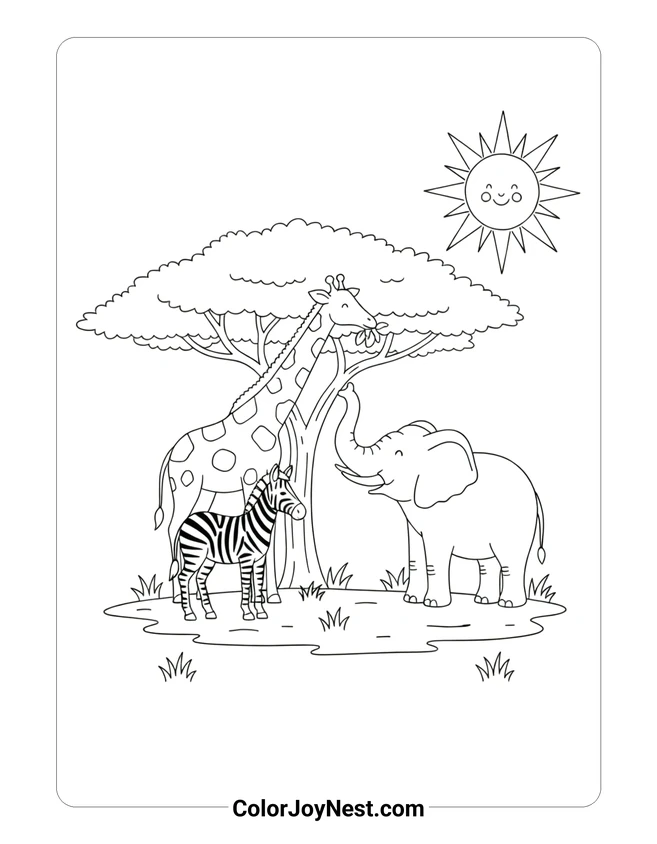
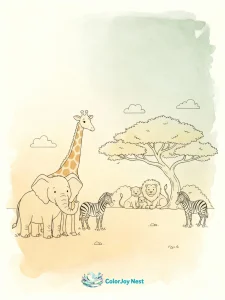
Savanna Friends Coloring Page
Giraffe, zebra and elephant under an acacia tree.
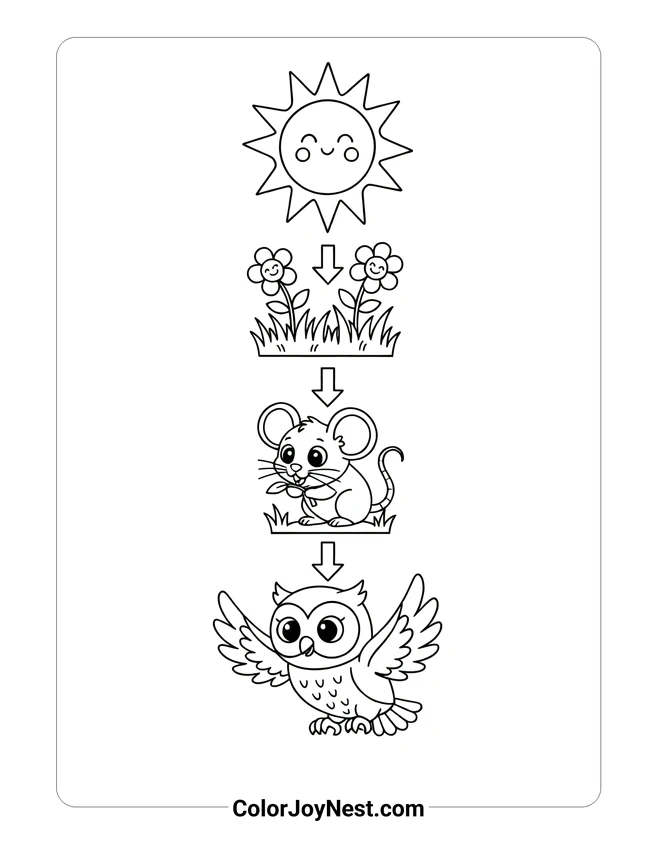
Food Chain Diagram Coloring Page
Simple food chain from grass to mouse to owl.
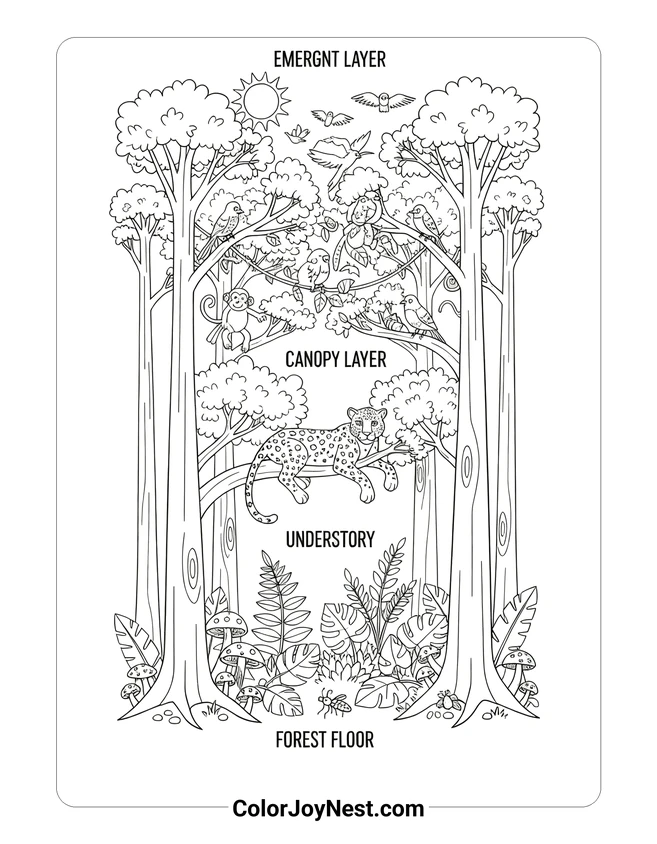
Rainforest Layers Coloring Page
Tall rainforest with layers from forest floor to canopy.
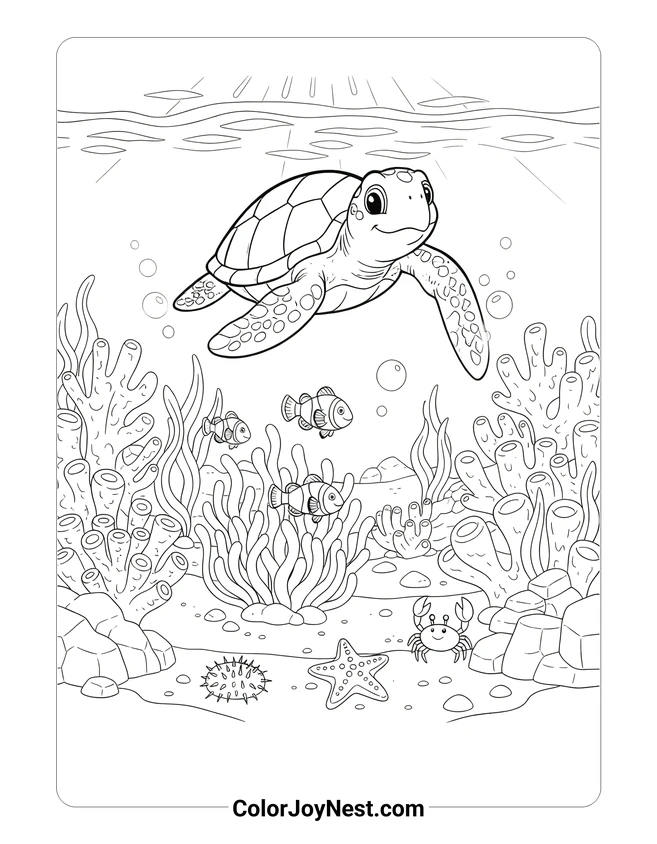
Coral Reef Ecosystem Coloring Page
Colorful coral reef with turtle, clownfish, starfish, and coral.
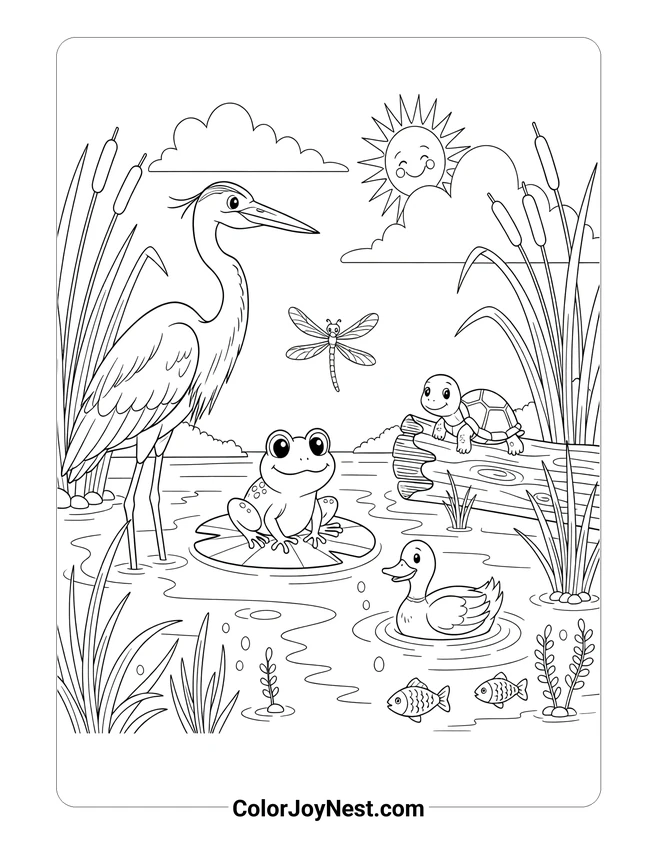
Wetland Habitat Coloring Page
Heron, frog and dragonfly in a marsh with reeds.
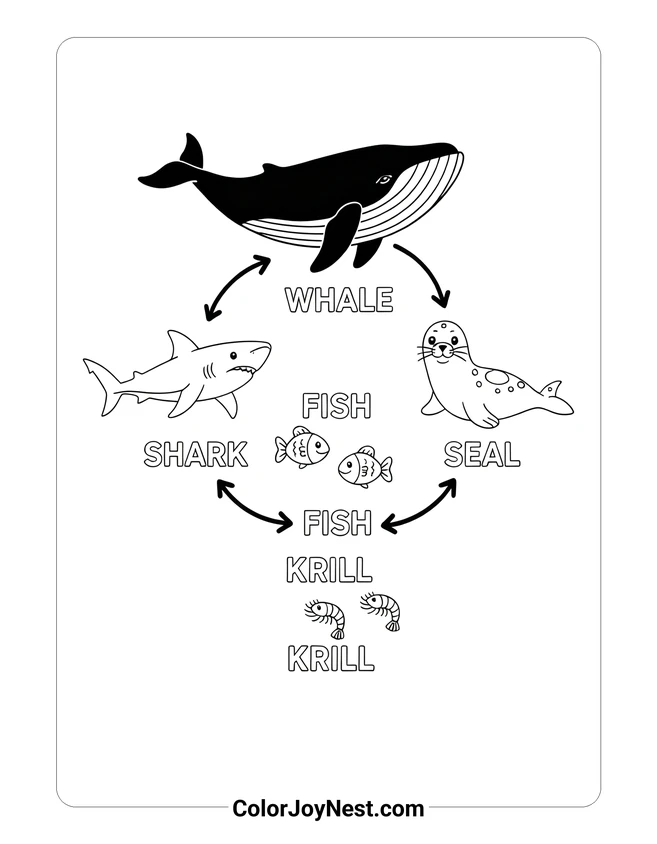
Ocean Food Web Coloring Page
Ocean animals connected by arrows showing energy flow.
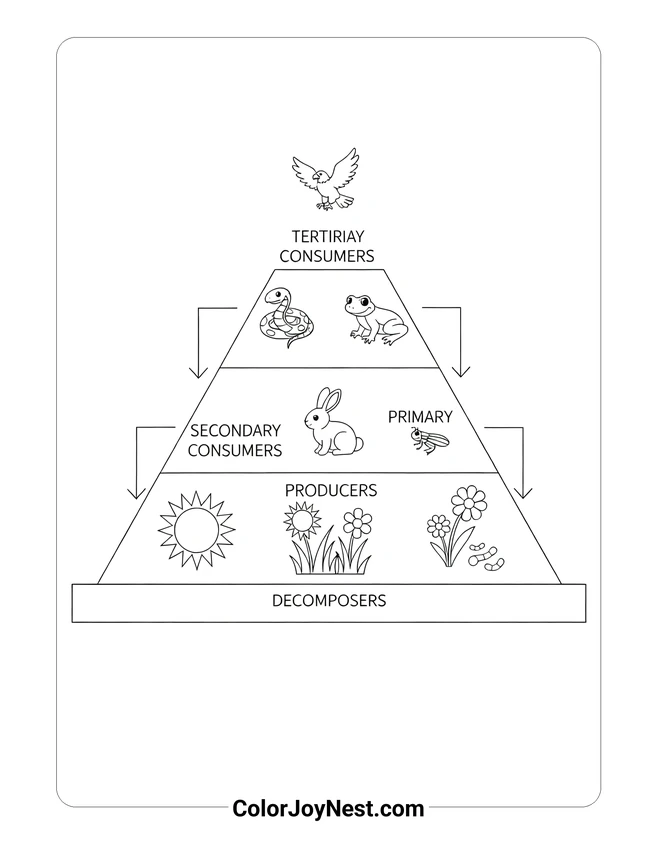
Energy Pyramid Coloring Page
Five-level energy pyramid showing ecosystem producers to predators.
That’s all 18 ecosystem pages—from coral reefs to frozen tundra. Here are some cool ways to bring them to life.
Creative Ecosystem Coloring Ideas
- Layer Lookup ⭐ INTERACTIVE – Before coloring the Rainforest Layers page, search online for real photos of each layer (forest floor, understory, canopy, emergent). Try to match the real colors you find.
- 10% Energy Rule ⭐ INTERACTIVE – On the Energy Pyramid page, color the bottom level (producers) the brightest green. Each level up, use a slightly lighter shade to show how energy gets smaller—just like real science says.
- Arctic Science Fix – Did you know penguins don’t actually live with polar bears? On the Arctic Ecosystem page, leave the penguins white like snow and add a small arctic fox in the corner instead.
- Food Web Arrows ⭐ INTERACTIVE – On the Ocean Food Web page, draw four extra arrows connecting the animals before you start coloring. Then color each creature using real-life ocean colors.
- Oasis Water Depth – On the Desert Oasis page, color the pond water light blue at the edges and darker blue in the middle. Leave tiny white spots uncolored to make the water look like it’s sparkling in the sun.
- Coral Rainbow Challenge – Real coral reefs have every color you can imagine. On the Coral Reef Ecosystem page, try to use at least 10 different colors—no gray or black allowed inside the coral.
- Wetland Sound Walk ⭐ INTERACTIVE – Go outside and listen for frog croaks or bird calls. Then color the Wetland Habitat page while you remember what you heard.
- Savanna Silhouette – On the Savanna Sunset page, color the sky in sunset stripes (orange at top, yellow and pink below). Leave the acacia tree solid black to make it look like a shadow against the sky.
- Tundra Fuzzy Fur – Arctic foxes have super fluffy coats to stay warm. On the Tundra Ecosystem page, color the fox with tiny short strokes instead of solid color to make it look soft and fuzzy.
- Pyramid Math – On the Energy Pyramid page, count how many plants you need at the bottom to feed one eagle at the top. Write the small numbers on the side of each level.
- Pond Half-and-Half – Draw a clear line across the water on the Pond Ecosystem page. Color everything above the line in bright greens (air and sunlight) and everything below in darker blues (shadow and mud).
- Mountain Elevation Colors – Mountains get colder as you climb. On the Mountain Ecosystem page, color the bottom in warm browns and greens, the middle in cooler grays, and the snowy peaks in white and light blue.
- Food Chain Story – Before coloring the Food Chain Diagram page, tell a mini story out loud: “The sun helped grass grow. A mouse ate the grass. Then an owl swooped down…” Finish the tale, then color.
- Desert Shadow Spot – On the Desert Cactus Scene page, use pale yellow and orange for the hot sky. Then color a dark blue shadow underneath the cactus to show the cool hiding spot where the lizard rests.
Scientists have found that about 25% of all ocean fish depend on coral reefs to survive—even though reefs cover less than 1% of the ocean floor. That’s like one neighborhood holding a quarter of a whole city’s population!